 |
 |
|||||
 |
 |
 |
 |
 |
 |
|
 |
 |
 |
 |
 |
 |
 |
 |
 |
 |
 |
 |
 |
|||||||||
|
February 18, 2004
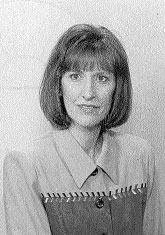
Daley offers big-name support to inclusion effort For 14 years, Maggie Daley has given more than her name to the Chicago-based Pathways Awareness Foundation, a not-for-profit that works to educate parents and medical professionals about the importance of early intervention for children with disabilities and the inclusion of people with disabilities into all aspects of community life—especially religious institutions. Daley, wife of Chicago Mayor Richard M. Daley, serves as the foundation’s president and works closely with its staff, including inclusion program, manager Joanne Meyer, who coordinated the “Open Hearts, Open Minds, Open Doors” project for faith communities. That project and the archdiocese’s Office for People with Disabilities recently were honored with the “Opening Doors” award from the U.S. Conference of Catholic Bishops Office for Persons with Disabilities. When Daley and Meyer teamed up for a telephone interview with staff writer Michelle Martin, Daley’s first words were, “This story has to be about Pathways, not about me.”
The Catholic New World: How did you first get involved in Pathways? Maggie Daley: Pathways was founded by a family (Patrick and Shirley Ryan) that was really interested in getting parents and medical professionals aware of early intervention for children who have some differences. When we decided to create an awareness campaign around this issue, that's when I got involved. We started the “Open Hearts” program because there seemed to be issues coming out of the faith community. They had good intentions, but weren’t very welcoming (to families with disabled members). It wasn’t for any reason, but they weren’t really aware they were excluding people. Cardinal Bernardin became aware of this and said he would like to help, and he requested his good friend (noted theologian) Henri Nouwen to come and speak at conference in 1996. When we planned it, we were going to be thrilled if a couple hundred people came, but we had between 800 and 900 at St. Monica’s that afternoon. And that was when I first met Joanne. Joanne Meyer: I attended the conference as the parent of a child with a disability. I had been trying to find ways to have him included in the faith life of my parish, and I wasn’t making much headway. It’s so painful when your faith community doesn’t reach out to you when you’re the parent of a child with a disability. Then I read about the conference in the New World and I went. This conference was phenomenal. It was so healing for me to see, yes, there are people who care.
TCNW: How can churches reach out to people with disabilities and their families? JM: A faith community has to be multi-ability, with opportunities for people of all abilities to participate, and it has to be willing to make accommodations. At my parish, one of the priests sets up a little stool behind the altar with a fan on it, and the fan blows on him for the whole Mass. I guess he gets really hot in those vestments. That’s an accommodation, just like a ramp or wider pews so people with walkers can get in and out. MD: All churches usually struggle with finances. We say, “Don’t think about that. Really open your hearts and your minds and think about it, and the rest will follow.”
TCNW: How did the Open Hearts program grow out of a campaign for parents and medical professionals? MD: Awareness for parents and medical professionals was the initial thrust, the initial mission of the foundation. But a person who is coming to our Web site (which features answers to common questions about early childhood development) is probably someone with a very young child. As the child grows, they see the need for further inclusion in the community.
TCNW: Why religious institutions? There are a lot of community institutions that might be unintentionally excluding people. JM: Not a lot of people were working with churches. And a faith community can be a wonderful source of support for families, especially at the very early stages, where you don’t know what this will mean for your child or your family.
TCNW: Mrs. Daley, you said at the beginning that this story had to be about Pathways, and that’s because you know that you draw attention. Given all the causes that would like your help, why is Pathways something that you give your efforts as well as your name to? MD: I think that when all is said and done, we help people one at a time. If we can impact this issue of intervening earlier, it deserves not only my attention, but all of our attention. It’s a rather simple quest, but more difficult than you might expect. No one does it out of meanness and neglect, but so often we fall into this wait-and-see trap—with all kinds of issues. Truly, we are beginning to see some results, because more and more children are being intervened (with) earlier. It will be a wonderful thing when we don’t have to do this anymore. It’s a privilege working with people like Joanne. They want to get out and really help other families who are in the same situation they were in. We all feel almost spiritually connected.
Pathways Awareness Foundation will accept applications for its “Open Hearts, Open Minds, Open Doors” and “Junior Open Hearts” awards from faith communities from February through April. For more information, visit www.pathwaysawareness.org/open or call (800) 955-2445.
Front Page | Digest | Cardinal | Interview |
||||||||