 |
 |
|||||
 |
 |
 |
 |
 |
 |
|
 |
 |
 |
 |
 |
 |
 |
 |
 |
 |
 |
 |
 |
|||
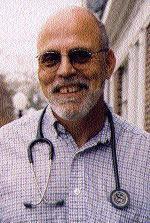 Bill Grimes, a Catholic deacon, nurse practitioner and assistant professor at the University of Kentucky, helped found the New Hope Clinic and designed a research study that allowed uninsured diabetics access to care. Catholic New World photo/Michelle Martin
Catholics minister by providing health care in Appalachia Catholics make up less than one percent of the population in the Appalachian area of eastern Kentucky and western Virginia. Parishes can include more than 1,000 square miles, and many churches see a priest only once a week for Mass, if that. This is home mission territory, one of the regions where the Glenmary Home Missioners are most active and where many parishes are helped by grants from the Chicago-based Catholic Extension Society. Yet dotted around the region are a variety of Catholic-supported efforts to bring health care to the poor and uninsured people who live there. Some are clearly identified as Catholic, such as the Little Flower Clinic in the basement of Our Mother of Good Counsel Catholic Church in Hazard, Ky. Others, such as the New Hope Clinic in Owingsville, Ky., are ecumenical efforts. Others have ties to Catholic health care organizations and are identified as Catholic primarily by the people who work in them, such as Medical Missionary for Mary Sister Bernie Kenney and health wagon, based in Clinchco, Va. The vast majority of the people they serve aren’t Catholic, but when it comes to fulfilling a basic human right, that’s just not an issue. For Dr. John Bellanger, who operates the Paint Lick Clinic in Paint Lick, Ky., it’s a matter of human dignity. Belanger, a parishioner at St. Clare Parish in nearby Berea, Ky., opted out of a government-sponsored clinic for the poor after learning that the sliding-scale fees charged there were still high enough to scare some patients away. That led people to put off preventative care, or care for chronic illnesses, and led to much more serious problems or even death. Now Bellanger operates his clinic as a not-for-profit with less overhead than a crawl space. By limiting his salary and doing away with the need for a billing department, he is able to cover his costs by charging patients directly. Most office visits cost about $20; patients get a bill on their way out the door and are asked to pay when they can. “At the end of the day, we’re maybe 70 percent unpaid,” he said. “At the end of the year, we’re about 90 percent paid.” Bellanger’s clinic will see anyone, no matter their income or insurance status, but will not take third-party payments. Free clinics, such as New Hope and Little Flower, exist to serve only poor people without insurance, often the working poor. They are staffed mostly by volunteers, with some partnerships with area medical centers. Sister Bernie’s health wagon also will see anyone, and it comes to them, because many of the patients don’t have transportation to get to a medical clinic. Franciscan Father Mike Chowning, pastor of Our Lady of Good Counsel, said outreach efforts are part of the church’s mission of caring for the poor and vulnerable. But they also provide a kind of evangelization in a region where pockets of anti-Catholicism still thrive. “Around here,” he said, “the Catholic Church has always had a good reputation among the poor. They feel that in some of the churches, they’ll only help you if you’re a member, but if you go to the Catholic Church, they’ll help everybody.” —Michelle Martin |
Fighting disease with faith
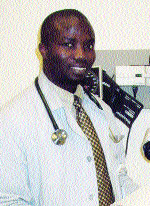
Catholics bring faith to diabetes efforts in urban, rural areas By Michelle Martin, Staff Writer Jill Grimes, a physician’s assistant and nurse practitioner, works out of a tiny storefront space on a street in downtown Owingsville, Ky., population 1,488. The community is more than 95 percent white, according to U.S. Census Bureau, with a median household income about half the median income for the country and more than 25 percent of its people in poverty. Dr. Theo Sai directs the Esperanza Centro de Salud in Pilsen, a community health center affiliated with St. Anthony Hospital. His patients are about 98 percent Latino, mostly of Mexican origin, and most of the adults under age 65 don’t have insurance. But the two men are fighting a common problem: diabetes. Diabetes has become epidemic in the United States, with more than 8 percent people over age 20 affected. But the prevalence is higher among certain populations, including the Appalachian people served by the New Hope Clinic and the mostly Mexican-Americans served by Esperanza. “Just being Hispanic is a risk factor for diabetes,” Sai said, noting the American Diabetes Association estimates that a Hispanic American is one and half times more likely to be diabetic than a non-Hispanic white of the same age. “If you break it down further, to Hispanics over age 50, it’s something like one in four is diabetic.” For both men, finding a way to prevent diabetes—and prevent complications for those who already have the disease—has become a cause. Grimes, who grew up in Mundelein and explored life as monk before getting married and landing as a Catholic deacon in Kentucky, sees health care as a basic right and part of the social justice mission of the church. “Health care is a basic right,” said Grimes, who holds a doctorate in ministry in health care and also serves as an assistant professor at the University of Kentucky. “I don’t mean necessarily a lung transplant or a heart transplant, but basic health care.” The church has always tried to heal people—that is, bring them to wholeness, he said. According to Maslow’s hierarchy of needs, people must get the basics first before they can concentrate on anything else, he said. “You can’t even begin to look at self actualization until you have your basic needs met—that’s things like food and shelter, and I would put health care up there. And we want to go beyond self-actualization to seeing our oneness with God. … You can’t be theological until you can be human.” Treating people as human is the focus of New Hope, which has about 1,500 patients, all with no insurance and incomes below 200 percent of the poverty line. It was started in 2000 by New Hope Ministries, Inc., an ecumenical group, with help from St. Claire Medical Center in Morehead, Ky., and the Gateway District Health Department, a consortium of four county health departments. Grants from local organizations, religious orders and other sources as well as private donations also helped. But it couldn’t have worked without the participation of community members—many of whom have become patients—who renovated the empty storefront provided by a local bank. After seeing dozens upon dozens of diabetic patients who could not afford everything from the glucose testing supplies they should use on a daily basis to laboratory work, nutritional counseling and eye and foot exams, Grimes struck upon an idea. He proposed a research project to take a group of poor, rural diabetics, give them everything they needed to follow the American Diabetes Association’s guidelines for treatment for a year, and see if it would make them healthier. While the study has yet to be published, Grimes said, preliminary results show that it is working. “Anecdotally, we’ve seen a significant improvement in the most important marker, A1c (a measure of the amount of glucose in blood over time),” Grimes said. “It shows that if you give this population of indigent people the information and the tools they need, they can do what they need to do. We were able to make a cohort of people healthier.” And given the same kinds of resources, Grimes said, clinics such as New Hope or other health care providers could do the same for people with heart disease, high blood pressure and other chronic conditions. Sai emphasizes educating his patients about the disease and what they can do to control it. Since many patients bring family members to their appointments, he works to teach the whole family. “It’s not like he’s got diabetes and that’s his problem,” said Sai, who was born in London and grew up in Ghana and Cuba. “He’s got diabetes, and it’s up to the whole family to help. Because if that’s my dad sitting there, I’m probably looking at me in 30 years.” The lifestyle changes he encourages, from a healthier diet to more exercise to getting regular checkups, could help prevent other family members from getting the disease, Sai said. Families also were encouraged to attend “Doing Diabetes Right,” a Nov. 20 open house that included free screenings for foot problems, glucose levels and blood pressure, as well as educational workshops and booths and healthy cooking demonstrations. Diabetes can be an insidious disease, Sai said, because in early stages, symptoms are non-existent or so mild they are easy to overlook. But diabetes—in which the body cannot properly metabolize glucose, leading to a buildup of glucose in the blood—can lead to a host of complications if uncontrolled, including foot problems leading to amputation, blindness, kidney failure and cardiovascular disease. While the populations of the problem might be different in Appalachia and Pilsen, the roots of the diabetes problem are the same. First is genetics: Type II diabetes, the most common form to affect adults, runs in families and in certain populations. That means that you could see increased prevalence in the close-knit communities of eastern Kentucky, or among a broader group, such as people of Latino heritage. It is most often diagnosed in middle age—a time when many poor people are uninsured. While Grimes’ clinic sees only uninsured patients, about half the 1,000 patients at Esperanza have some form of health coverage, Sai said. But taking out children under 18 and pregnant women who are eligible for the state’s KidCare program, and seniors on Medicare, close to 80 percent of the other patients have no coverage at all, he said. Then there are lifestyle factors, such as level of exercise and diet, both of which are related to the amount of education people have, the men said, and which can be changed at a relatively small cost. “It’s probably a problem here because of the fact that one of the precursors to diabetes is metabolic syndrome, which includes things like obesity, high blood pressure, very high cholesterol,” Grimes said. “The diet is very high in things they can afford, things like soup beans and fat pork. I’d never seen anyone make gravy from the drippings of fried baloney until I came here. … The poorer the person, the less likely they are to be able to go out and get the good food and do the things they need to do to take care of themselves. It’s a poor people’s disease.” Sai said poverty is a factor, but not the only one. Many of the Mexican-American patients he sees also eat a diet high in carbohydrates and fat, including lots of tortillas, beans cooked with lard and rice. “It’s very cheap,” he said. At the same time, they don’t have the money to join a gym, and aren’t used to cold weather, so many won’t go outside to exercise in the winter, he said. Poverty also stops people from following doctors’ advice, he said. “I can write a prescription for someone, but if they have a heating bill that needs to be paid before they can turn the heat on, they’ll do that before they buy the medicine, and they won’t tell me,” he said. “Then when they come in the next time, their labs are all out of whack, and I start asking. That’s when they tell me.” Grimes said his clinic provided diabetes drugs as part of the study, and works to provide diabetes drugs to other patients at low or no cost, but there is a huge need for a way to get such medicines into the hands of poor patients, including those on Medicare and those with no insurance. “For the most part, these are people who are working,” he said. “But maybe it’s a family where the wife works at McDonald’s and the husband works at Wal-Mart and they don’t get insurance, or if it is available, they simply can’t afford it. It would cost more than they are making.” |
||
|
|
|||