 |
 |
|||||
 |
 |
 |
 |
 |
 |
|
 |
 |
 |
 |
 |
 |
 |
 |
 |
 |
 |
 |
 |
|||
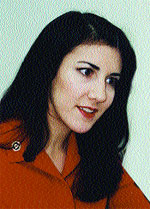 Mary-Louise Kurey Catholic New World /David V. Kamba |
Stem cell plan opposed
By Michelle Martin Catholic leaders from around Illinois are mobilizing to fight a proposal for the state to fund $1 billion in stem cell research over the next 10 years. “The Catholic Church is very supportive of ethical medical research, but embryonic stem cell research and human cloning basically destroy innocent human lives in hopes of finding a cure for numerous diseases,” said Mary-Louise Kurey, Respect Life director for the Archdiocese of Chicago. Illinois State Comptroller Dan Hynes plans to take the idea for the Illinois Regenerative Medicine Institute to the legislature next year. If a majority approve, a binding statewide referendum would be placed on the November 2006 ballot, asking whether the state should borrow $100 million a year for 10 years to fund stem cell research. The loans would be paid back with money raised by a new 6 percent tax on elective cosmetic medical procedures, such as liposuction, Botox injections and breast enhancement, Hynes said. Robert Gilligan, executive director of the Catholic Conference of Illinois, said the church would oppose public funding for any morally objectionable medical research. “It’s a shame that Dan Hynes—especially as a Catholic—would reduce people to their usefulness,” Gilligan said. Hynes unveiled his plan at a press conference Nov. 23. Flanked by more than a dozen supporters, including research scientists from major schools of medicine, Hynes said his wife, Christina, a fourth-year resident at the Rehabilitation Institute of Chicago, sparked his interest. The legislature could approve the cosmetic procedures tax next year, before the statewide referendum, Hynes said, raising about $15 million to organize the institute and possibly pay for some initial research grants. The bond plan is similar to a $3 billion bond program to fund such research approved this month by California voters. States must take action to fund such research, he said, because the federal government has “abdicated its responsibility” by limiting federal funding to research on a relative handful of embryonic stem cell lines, effectively “handcuffing” scientists. The announcement came only five days after the Illinois Senate narrowly defeated a bill that would have given privately funded embryonic stem cell research the state’s endorsement. The bill was defeated 28-29; it needed 30 votes to pass. Hynes’ proposal goes much further, giving researchers financial backing from the state. It has the support of Rep. Sarah Feigenholz (D-Chicago) and Sen. Jeff Schoenberg (D-Evanston), who sponsored the private measure. House Minority Leader Tom Cross (R-Plainfield) said he’ll do everything he can to get it passed. “I stand here in my role as house minority leader,” Cross told an audience of reporters. “But I have a more important role, as the father of an 11-year-old daughter with diabetes.” Advocates for stem cell research say that it will revolutionize medicine by allowing doctors to regenerate organs damaged by illness or injury, holding out promise for a number of now-incurable conditions, including diabetes, Parkinson’s Disease, ALS and spinal cord injuries. Ongoing research includes work with stem cells harvested from living human beings, with no harm done to the donor; cells taken from the blood found in the umbilical cord after a baby is born; and cells derived from embryos. To obtain such cells, the embryos must be destroyed. The Catholic Church supports and encourages adult stem cell research and research on umbilical cord stem cells, Kurey said, but draws the line at destroying human embryos to achieve a potential benefit for other people. Supporters of embryonic research note that thousands of such embryos, created in in vitro fertilization procedures and never implanted, are destroyed every year already. Mary Hendrix, president and scientific director of the Children’s Memorial Institute for Education and Research, said she believes scientists must work with all kinds of stem cells. “They complement each other, but they are not interchangeable,” she said. “We need to work with all of them to see what the different capabilities are.” Kurey pointed out that several therapies have already been developed using adult stem cells; embryonic stem cell therapies have not gone beyond the lab to the treatment room, even for human trials. Hynes and other supporters said they think they can sway some of the people who voted against this year’s bill by talking about potential economic benefits the state could reap by attracting major researchers and by emphasizing that their plan gives the people of the state the final say. “Polls show that a wide majority of people favor stem-cell research,” Hynes said. “That includes majorities that call themselves pro-life, that call themselves Republican or that call themselves Catholic.” A Pew poll conducted in August found that 52 percent of American Catholics supported embryonic stem cell research.
|
||
|
|
|||