 |
 |
|||||
 |
 |
 |
 |
 |
 |
|
 |
 |
 |
 |
 |
 |
 |
 |
 |
 |
 |
 |
 |
|||
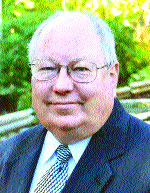 Bob Voboril |
Stewardship and schools
Chicago parish takes a bold ‘leap of faith’ By Michelle Martin As Catholic school students returned to classrooms all over the archdiocese, their parents reached for their checkbooks to start paying tuition again. Bob Voboril, superintendent of schools for the Diocese of Wichita, Kans., fears that in doing so, they are harming their relationships with their parishes and making the parochial school system less Catholic. Don’t get him wrong. Voboril is all for Catholic education. He just thinks it should be available to Catholic children—and that by making parents responsible for the bulk of the cost, the schools become more “private” and not as connected to the community of faith. Voboril came to Chicago twice last spring to talk with school leaders and will speak at Parish Leadership Day in November about how the “stewardship way of life” affects the 37 schools in his smaller diocese, and what he thinks it could do for the archdiocese. “At the heart of the model, stewardship has to be seen not as a way to fund schools, but as a spiritual gift,” Voboril said. “The core of the program is to invite people to share what they have. God doesn’t really need your money. What he needs is your heart. We have to give our hearts. We have to convert.” In Wichita’s experience, “stewardship” means asking all parishioners to commit to share with the faith community the gifts they have been given. If all share, there is enough money to provide everyone with what they need—from subscriptions to the diocesan newspaper to Catholic schools for all families who want them. It’s a challenging concept and parishioners here at Immaculate Conception Parish (S. Exchange) will be trying it for themselves this year and a few more parishes will explore the possibility, according to archdiocesan officials. For Father Michael Enright, pastor of Immaculate Conception, making the move is a leap of faith. Last year, Immaculate Conception had more than 150 students in kindergarten through sixth grade. Since the parish operates in a low-income community with a large population of Latino immigrant working families, tuition was on a sliding scale of about $200 to $2,000 per student. The school has been able to keep costs down because all the teachers are sisters from a Mexican congregation, the Daughters of Mary Immaculate of Guadalupe, who came to Chicago specifically to serve in the school, which opened two years ago. For the parish stewardship plan to work, Enright said, the parish needs an average of about $4,600 in its weekly collections. Over the summer, it has been averaging about $3,200. But that’s up significantly from last year, when the weekly collection was under $2,000.
Enright attributes the increase to the efforts of the school families, all of whom must belong to the parish. “They really want to see this work,” he said. “They’ve been very supportive of the parish. ... We have a unique situation here.” The “stewardship way of life” started slowly in Wichita, with one parish asking members to commit to giving five percent of their incomes to the church in 1968. That money would be used to pay for all parish services, including the elementary school and eliminating the need for individual tuition, Voboril said. “It was almost an immediate success,” he said. It was 17 years later that Bishop Eugene Gerber decided to expand the concept of stewardship to the whole diocese, rewriting policies to focus on stewardship—that is, using God’s gifts for the good of the whole community. That meant, for example, no more second collections; the needs such collections had funded were paid for by the commitments Catholics made to share their gifts. While no parish was mandated to stop charging tuition for its school, most did over the next few years, Voboril said, with the last ones ending the practice of collecting tuition two years ago. But living out stewardship requires a radically different way of looking at life than that portrayed in popular culture, Voboril said. “We all think, ‘I have money and it’s mine and I can spend it on whatever I want and it’s none of your business,” Voboril said. “Stewardship says the opposite. It says none of it is mine. It is all a gift from God.” Catholic schools make up a huge part of the program because they are the way the church has traditionally spread and renewed itself from generation to generation in the United States, beginning with Baltimore plenary council in 1884. “At that time, we were basically an immigrant church, with probably 95 percent of Catholics immigrants or their immediate descendants,” Voboril said. “And the bishops said we are going to grow the church by educating their children.” Education—whether religious education or Catholic schools—still draws people into involvement in their parishes, Voborsil said, and not charging tuition encourages that involvement. “It centers the Catholic life on the parish,” he said, explaining that charging tuition sets up more of a private contract between the parent and the school—payment for services rendered—rather than encouraging the whole family to see itself as part of a larger Catholic community, in which all are responsible for the education of all the children. “Stewardship bonds the parents to the parish. And it makes Catholic schools really Catholic, instead of private institutions for those who can afford them.” That’s been a big concern to Nicholas Wolsonovish, the Archdiocese of Chicago’s superintendent of schools, who has seen the charts showing enrollment in Catholic schools going down as tuition rises. “We have to be school for everyone, not just private schools for the affluent,” said Wolsonovich, who supports more private endowment funding and public funding for parochial schools as well as moving to a stewardship model. “We have to do a better job of that.” Since parishes in Wichita don’t have their own high schools—there are four Catholic high schools in the diocese—parishes pay the cost for their own students. To register, families must present a letter from their pastors saying they are active members of the parish. Similarly, parishes without schools generally pay the cost for any students who want to attend a neighboring parish elementary school. So far, it’s working, Voboril said, even in one inner-city parish school where 70 percent of the students are not Catholic. “The people of that parish take great pride in supporting their Catholic school, and it really is Catholic.” Making the conversion is difficult, especially in parishes that have seen an influx of immigrants, such as those from Latin America. There, most Catholic schools have functioned as elite private academies, not open to the children of workers. “The challenge is the people with the money are the white people, who are looking around and saying, ‘Is this really my parish anymore?’” he said. “Many of the immigrant families are literally penniless, because half of what they do make, they’re sending back to Mexico. So you’re asking people to pay for the education of children who are literally foreign to them. But that’s what it means to be Catholic. We have to go back to the notion that providing Catholic education is the responsibility of the entire Catholic community.” It doesn’t start in the school, though. It has to start in the parish. “You need to look at how the parish is meeting the spiritual needs of the community. Do you even know what the spiritual needs of your community are? Then the parish leaders have to be committed to it, starting with the pastor. Then the stewardship committee, the pastoral council, the finance committee all have to be committed to it. It starts by having a stewardship committee. You instill it into each piece of the parish. It’s part of marriage preparation, baptismal preparation. In hundreds of different ways, you weave it into the way you do things.” Making the change isn’t quick or easy, Voboril said, but he thinks the Archdiocese of Chicago will move more quickly than Wichita. “It’s like a flywheel. The first time around, it takes forever,” he said. “The second time around takes almost forever. But by the 20th time around, it’s moving so fast you can’t count the revolutions. “You’re essentially saying, ‘Let’s just be Catholic.’ Most Catholics would want anything just to see the church be consistent with what the church believes.”
|
||
|
|
|||